

Applied Learning Programme (ALP)
Applied Learning Programme (ALP)
Our ALP “imaginEErs - Creativity unlocked: Excite. Explore. Excel” seeks to provide opportunities for our students to be involved in exciting STEM hands-on activities and encourage them to explore ideas, try out new skills such as basic coding, and be creative, placing great emphasis on cultivating the joy of learning in them.
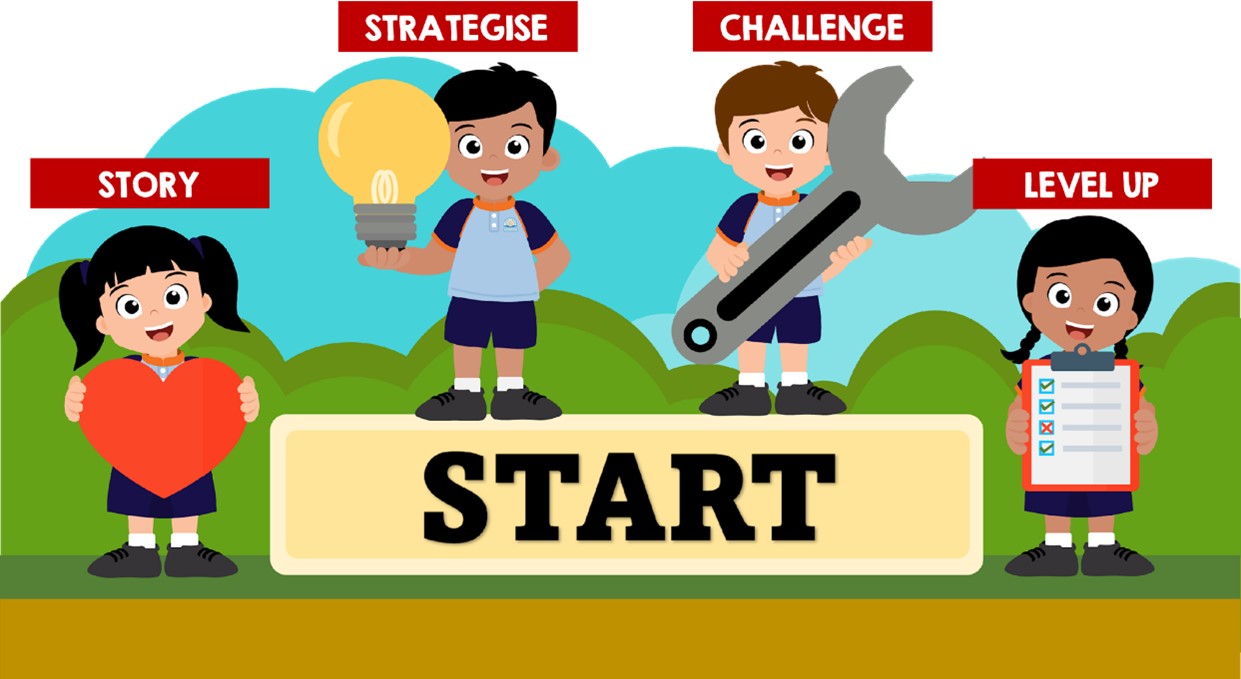
Our Design Process, The Game Plan, has been adapted from the Design Thinking Framework to tie in with the contextual theme of Game Design and Making. At the Story stage, students will be presented with a narrative where they will have to empathise and define the problem. At the Strategise stage, our students are involved in the ideation process to solve the problem that was identified. At the Challenge stage, students create and test their prototypes, gameplay and suitability in solving the problem. At the Level Up stage, students are introduced to an ideation strategy, SCAMPER, to make the necessary changes and improvements to their prototypes.
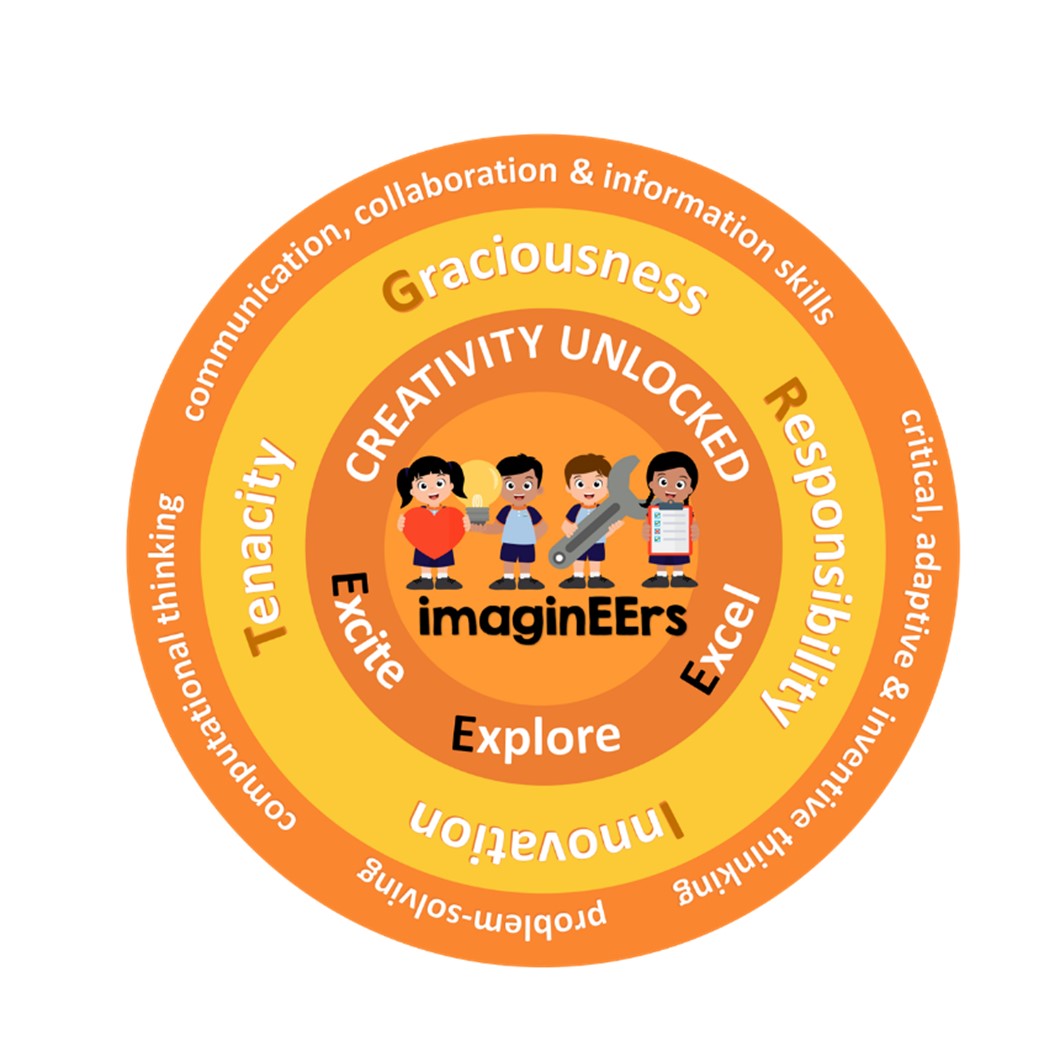
Through imaginative learning experiences, we aim to develop our students’ critical, adaptive and inventive thinking skills through student-centred pedagogy and STEM-related dispositions - GRIT (Graciousness, Responsibility, Innovation and Tenacity) and foster communication and collaboration skills while working in teams, to eventually nurture confident and creative imagineers.
The ExFactor: A Two-Tier Approach
A tiered approach ensures every student experiences a spark of excitement while providing a dedicated platform for talent to shine.
Interdisciplinary Project Work (IPW)
Primary 4 students embark on a 3-term interdisciplinary journey - “Care Chat: AI-Enhanced Empathy in Game Design for Active Ageing.” This project bridges the gap between technology and compassion, challenging students to apply skills from Mathematics, Science, English, Art, Physical Education, and FTGP to address a pressing national challenge: supporting Singapore’s aging population.
The imaginEErs Mindset
Being an imaginEEr is not just about winning; it is about the process of improvement. By testing, failing, and refining their designs, students develop an “imaginEErs Mindset”, – the belief that they can improve the world around them through hands-on innovation and tenacity.
Video